
Precision Screening, Safer Transfusions: How NAT Is Reshaping Blood Safety?
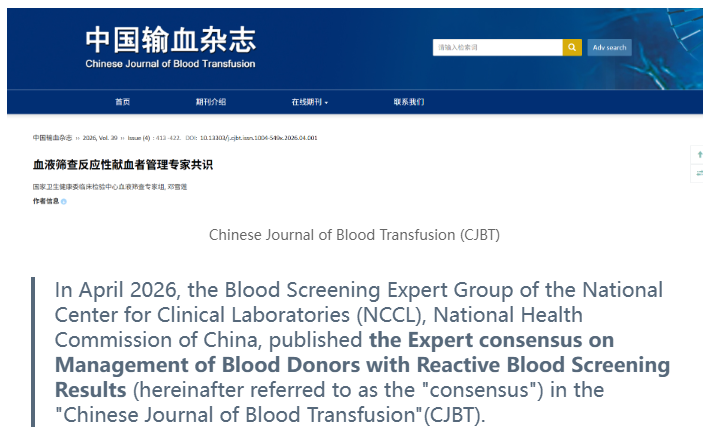
The consensus sets evidence-based standards for nationwide blood establishments to standardize blood screening workflows, optimize blood donor management, and strike a balance between blood safety and the rights and interests of blood donors.
Furthermore, the consensus identifies the following limitations of the Guidelines for Re-entry of Blood Donors with Reactive Screening Results: “It only addresses serological test findings, without fully leveraging the NAT platforms of blood establishments to conduct testing and analysis. It fails to definitively determine donors’ infection status, and to obtain relevant epidemiological data on transfusion-transmitted infections (TTIs) among the donor population.”
Blood screening is the first line of defense against TTIs and safeguards clinical blood supply safety. NAT is the core technology emphasized in this consensus and provides a critical solution to address the limitations of conventional serological testing.

Sansure Biotech is deeply engaged in infectious disease molecular diagnostics and consistently optimizes the complete end-to-end blood screening workflow through technological innovation. Leveraging NAT assays with high analytical sensitivity and integrated solutions, Sansure assists blood establishments in implementing the consensus recommendations, reinforcing transfusion safety, and protecting the well-being of both blood donors and transfusion recipients.
This consensus first clarifies the criteria for blood screening markers. It notes that HBV DNA serves as the most direct evidence of HBV replication and can be detected prior to HBsAg, making it widely used for the early diagnosis of at-risk populations.
Accordingly, Article 2 of the consensus specifies: “HBV DNA testing constitutes an important means of identifying early and occult HBV infections.” With regard to HCV, the consensus specifies: “Currently, combined testing for HCV RNA and anti-HCV is most commonly adopted in HCV blood screening. Concurrent detection of both HCV RNA and anti-HCV indicates current HCV infection, which warrants antiviral treatment. Only anti-HCV will remain detectable after spontaneous clearance of HCV infection or successful antiviral treatment. A positive HCV RNA result without detectable anti-HCV indicates window-period HCV infection.” On this basis, Article 3 of the consensus specifies: “Detection of HCV RNA indicates current HCV infection, which requires antiviral treatment.”
As testing technologies continue to evolve, high-sensitivity reagents improve the capacity for pathogen detection, yet also bring industry pain points including an increased rate of false-reactive results, unnecessary donor deferral and donor attrition. These are the key issues highlighted in this consensus. To address false-positive issues arising in blood screening, Article 7 of the consensus clearly recommends: ” Both discriminatory NAT following a reactive multiplex result and pool-resolution testing involve additional NAT testing. Together with the methodological characteristics of NAT, these testing algorithms provide substantially greater specificity than serologicalscreening alone.”
Regarding the limitations of current confirmatory testing and application considerations for NAT, the consensus states: “As NAT gains wider adoption, many guidelines and standards recognize pathogen NAT as an optional tool for diagnosing infection, providing an alternative way to verify reactive serological results. The US FDA advises that for blood screening, simultaneous detection of HBsAg and HBV DNA, anti-HCV and HCV RNA, or HIV Ag and HIV RNA allows serological markers and viral nucleic acids to mutually confirm each other, with no further confirmatory tests required.”

Accordingly, Article 8 of the consensus recommends: “Confirmatory testing has limitations, and NAT represents a vital method to confirm reactive serological findings.” Article 9 further recommends: “In blood screening, if serological markers and NAT results point to the same pathogen, the blood donor can be confirmed as infected with that pathogen.”
In the section titled “Confirmation of TTIs and Evaluation of Blood Donor Eligibility,” the consensus reiterates the importance of NAT: “Under current technical specifications for blood screening, laboratories have the technical capability to obtain both serological and viral NAT results simultaneously. If serological markers and NAT results both indicate the same pathogen, the donor’s infection can be confirmed directly.”
The consensus also notes that follow-up studies reveal persistent or intermittent biological false-reactive results are commonly observed across all serological assays used in blood screening. This phenomenon manifests when one reagent yields persistent or intermittent reactive results on blood samples from donors over an extended period. The incidence of persistent or intermittent biological false-reactive results varies among different testing items and reagents.
To address this issue, Article 12 of the consensus explicitly recommends: “When a donor’s infection status cannot be confirmed, donor eligibility may be assessed through follow-up testing. A three-month interval for repeat testing is recommended. This interval facilitates identification of the window periods for HBV, HCV, and HIV. Meanwhile, it shortens the waiting time for donors and improves participation rates in follow-up testing.”
NAT-based discriminatory and resolution testing can help resolve reactive serological results with high specificity. It can effectively identify HBV window-period infection and occult HBV infection. Furthermore, NAT results can mutually corroborate serological findings, streamline confirmatory workflows, and reduce misjudgments caused by false-reactive results.
Sansure Biotech has over a decade of expertise in nucleic acid screening for blood-borne infectious diseases. The independently developed series of HBV, HCV and HIV NAT reagents boast analytical performance and align closely with the testing principles emphasized in the consensus. Capable of accurately detecting low viral loads, the assays efficiently identify window-period and occult infections and fill the gaps in serological testing. In addition, the assays provide broad coverage across clinically relevant viral genotypes and subtypes and are well-adapted to the viral genotype profiles prevalent in Chinese populations. This minimizes the risk of missed detection at the source and consolidates the foundation of blood safety.
Voluntary non-remunerated blood donation is a selfless act. Every unit of donated blood deserves to be cherished, and the rights of every blood donor should be protected. The Expert consensus on Management of Blood Donors with Reactive Blood Screening Results charts the course for the industry. Supported by robust domestic innovative technology, Sansure Biotech will uphold its mission—Innovating Life Tech For All, empowering blood establishments to smoothly implement the twelve specifications outlined in the consensus.
Moving forward, Sansure Biotech will continue to work with partners across the blood-transfusion community to strengthen blood safety, reduce unnecessary donor loss, support a stable voluntary non-remunerated donor pool, and help make every transfusion safer through science and innovation.