One Test, Three Viruses: Advancing HIV Screening with HBV/HCV/HIV NAT

The National Guideline for HIV Testing (2025 Revision) incorporates NAT into the HIV screening algorithm for the first time: for special populations with a recent exposure history, acute-phase symptoms, prior pre-/post-exposure prophylaxis use, or immunodeficiency, HIV-1 NAT can be used to identify window-period infections; for populations at high risk of HBV/HCV/HIV co-infection, combined HBV/HCV/HIV NAT is recommended to catch cases that serological methods tend to miss. The HBV/HCV/HIV triplex nucleic acid kit uses multiplex real-time fluorescent PCR to detect all three viruses simultaneously in a single tube — highly sensitive, tolerant of sample interference, covering diverse HIV subtypes and more cost-effective — supporting integrated multi-disease screening for key populations and helping raise the early detection rate of HIV.

China’s HIV situation is also far from optimistic: by the end of 2025, the cumulative number of reported people living with HIV/AIDS nationwide was about 1.41 million — 775,000 with HIV infection and 635,000 with AIDS — while cumulative reported deaths exceeded 520,000. In 2025, 87,881 new cases were reported, of which heterosexual transmission accounted for 72.8% and same-sex transmission 25.7% [3]. To meet this severe challenge, the Plan for AIDS Containment, Prevention and Treatment in China (2024–2030) further calls for more than 95% of people living with HIV to be diagnosed and aware of their infection status by 2030 [4]. At present, however, China’s HIV case-finding rate is only 84% — still a gap from the 95% target — and the proportion of late HIV diagnosis is relatively high, at 38.7%.

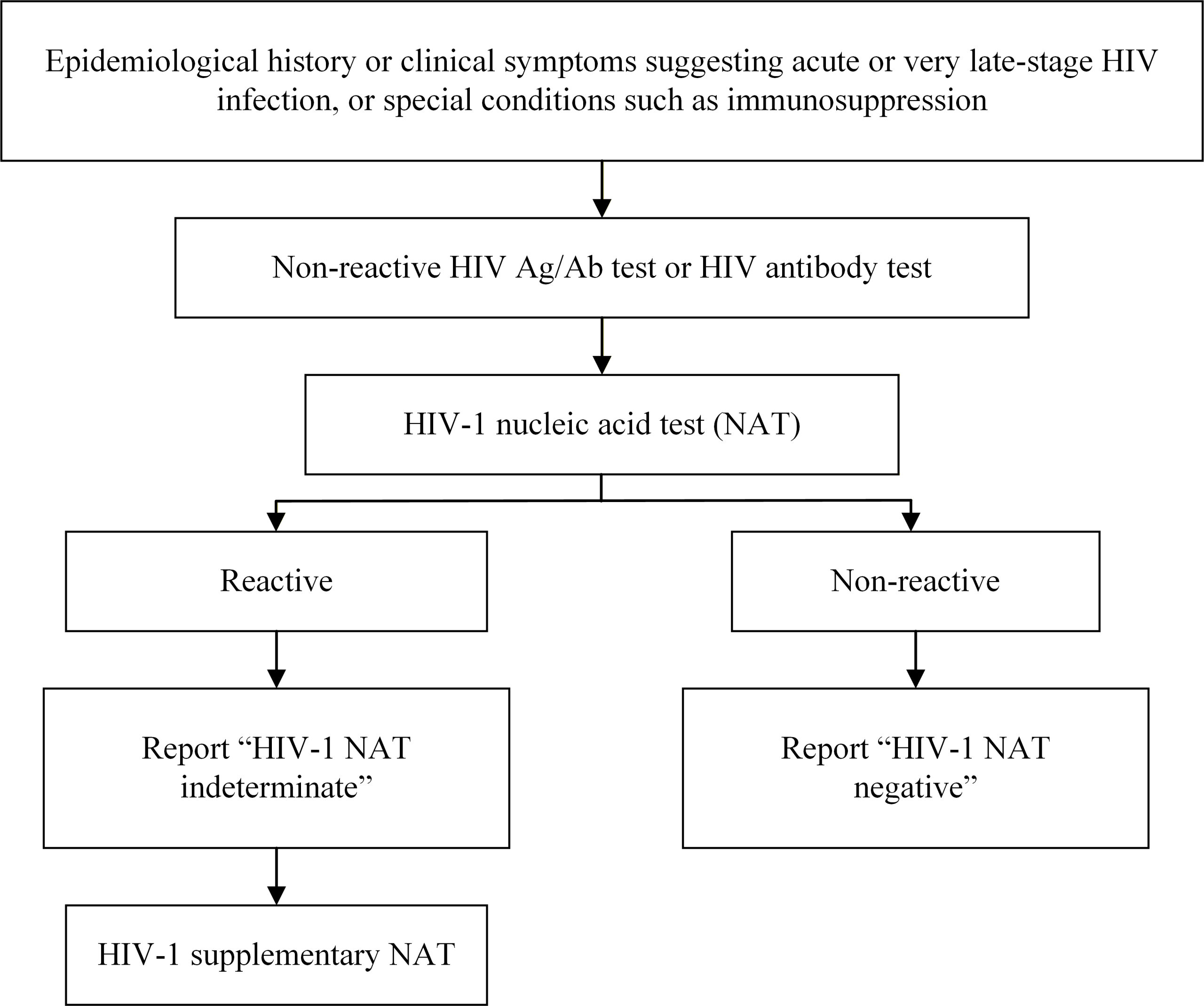
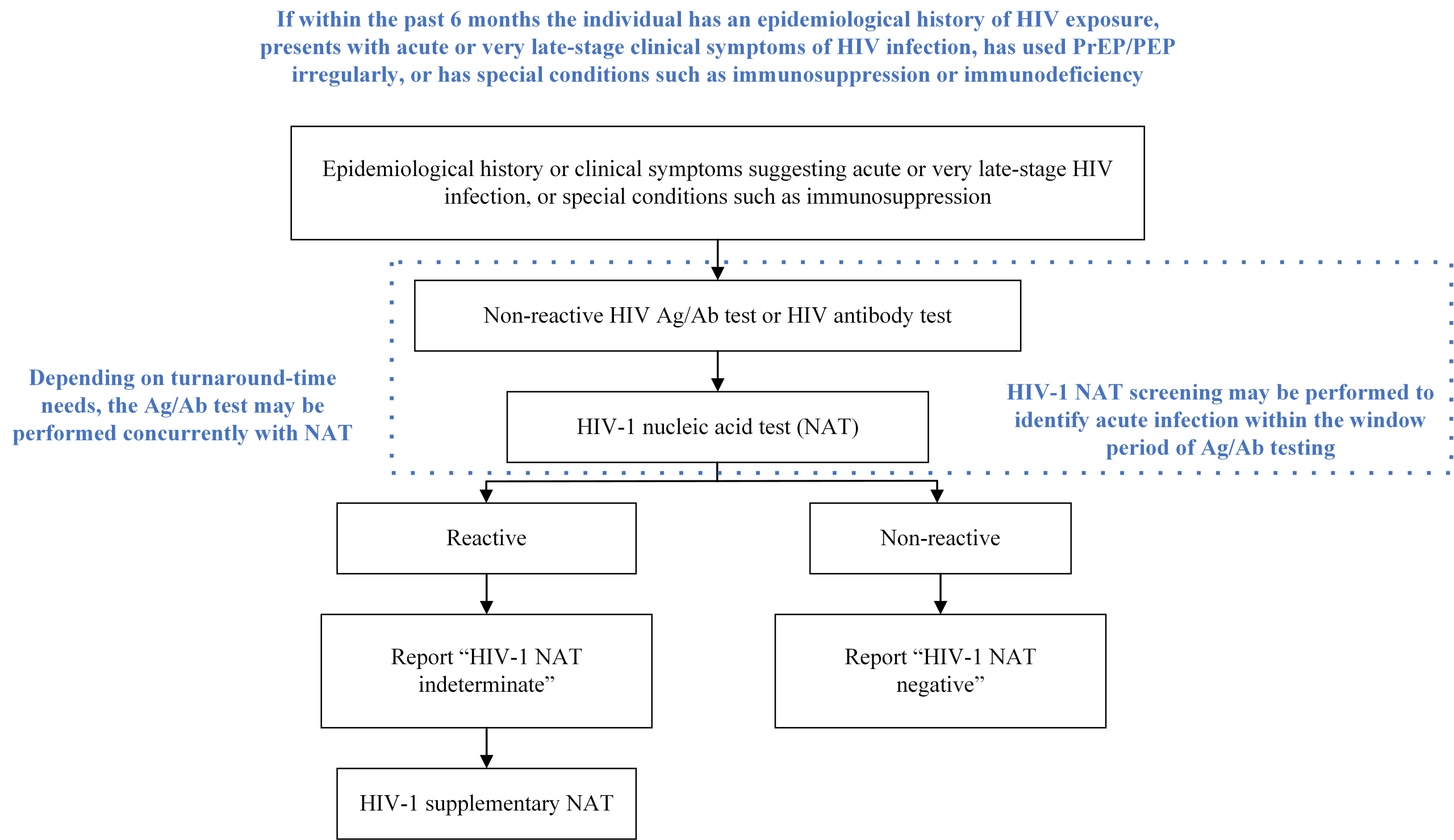
2.1.4 Screening algorithm using the HIV-1 nucleic acid test
If an individual, within the past 6 months, has an epidemiological history of HIV exposure, presents with acute or very late-stage clinical symptoms of HIV infection, has used pre-/post-exposure prophylaxis irregularly, or has special conditions such as immunosuppression or immunodeficiency, and the HIV Ag/Ab test or HIV antibody test is non-reactive, HIV-1 NAT screening may be performed to indicate whether an acute infection exists within the window period of antibody or antigen testing. If the HIV-1 NAT screening test is non-reactive, the result is reported as “HIV-1 NAT negative”; if reactive, it is reported as “HIV-1 NAT indeterminate”, a new blood sample must be collected, and an HIV-1 supplementary NAT is required to confirm infection.
6.3 Combined NAT for HIV and viral hepatitis
Combined NAT for AIDS and viral hepatitis refers to methods that detect, in a single assay, the nucleic acids of multiple pathogens that share similar transmission routes and affected populations — HIV together with hepatitis B virus (HBV) and hepatitis C virus (HCV); such combined assays are currently mainly qualitative. In blood-station screening of donated blood, combined HIV/HBV/HCV NAT has been widely validated and adopted; used together with antigen/antibody-based immunoassays, it effectively reduces missed detections of HIV, HBV and HCV infection and safeguards the safety of clinical blood transfusion. In recent years, studies have also explored applying combined NAT for the three pathogens among key populations co-infected with HIV, HBV and HCV, and among special populations attending medical institutions (e.g., people with immune deficiency), in order to rapidly and accurately identify unusual infections that antibody testing alone can hardly detect or diagnose — effectively integrating testing resources, helping infected individuals fully understand their infection status, and reducing potential iatrogenic transmission risks.
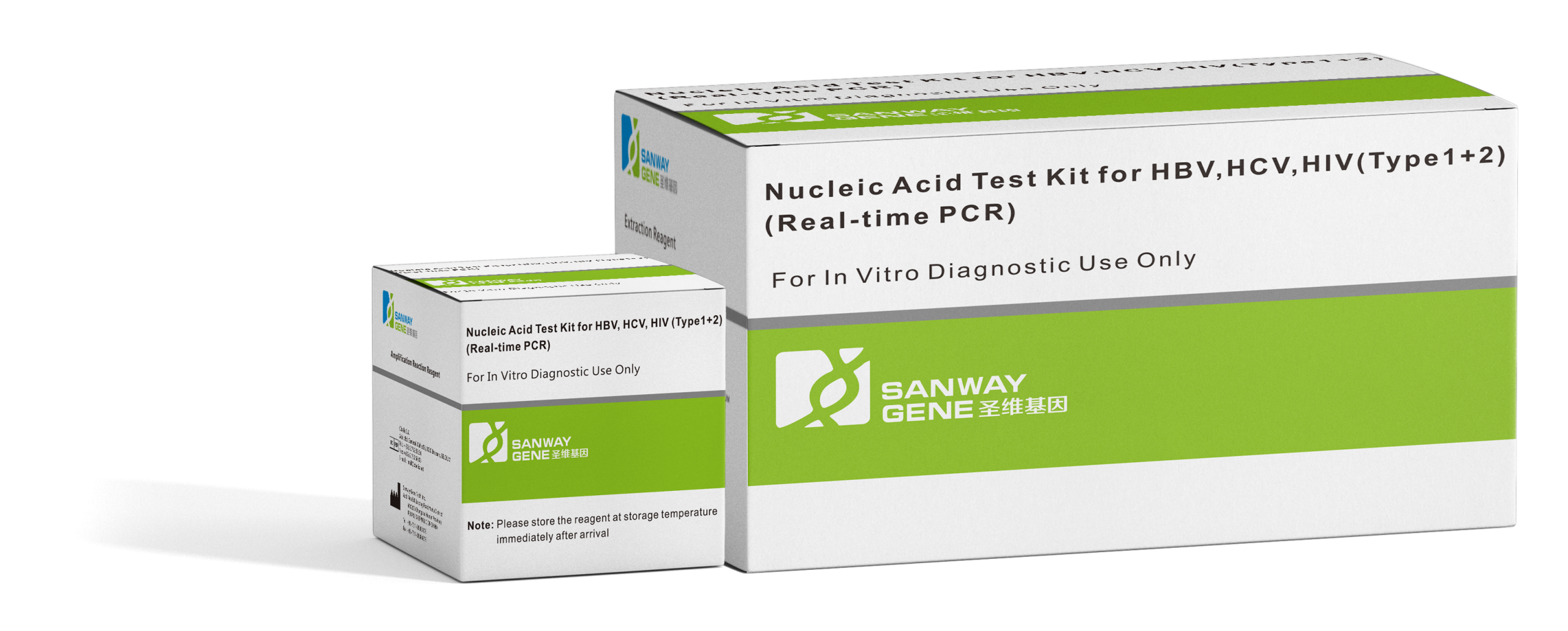
Nucleic Acid Test Kit for HBV, HCV, HIV (Type 1+2) (Real-time PCR) * CE List A certified
| Limit of detection | Genotype coverage | |
| HBV | 2.41 IU/ml | HBV genotypes A, B, C, D, E, F, G, H |
| HCV | 12.38 IU/ml | HCV genotypes 1, 2, 3, 4, 5, 6 |
| HIV-1 | 31.68 IU/ml | HIV-1 Group M, N, O |
| HIV-2 | 48.34 IU/ml | HIV-2 Subtypes A/B |
- Detection principle: single tube, multiple fluorescence PCR technology, can detect four items
- DNA/RNA Extraction: lysis at room temperature
- Extraction technology: magnetic bead method
- Sample type: plasma, serum
- Nucleic acid does not require elution and is amplififiedwith magnetic beads
References
- Global HIV & AIDS statistics: Fact sheet [EB/OL]. (2026-07-27) [2026-09-18]. https://www.unaids.org/en/resources/fact-sheet.
- World Health Organization. Global health sector strategies on HIV, viral hepatitis and sexually transmitted infections for the period 2022–2030 [R/OL]. Geneva: WHO. (2022) [2026-09-18]. https://www.who.int/teams/global-hiv-hepatitis-and-stis-programmes/strategies/global-health-sector-strategies.
- National Center for STD/AIDS Prevention and Control, China CDC. Epidemiology of HIV/AIDS and STIs in China, December 2025 [J]. Chinese Journal of AIDS & STD, 2026, 3: 253. DOI: 10.13419/j.cnki.aids.2026.03.01.
- General Office of the State Council of the PRC. Plan for AIDS Containment, Prevention and Treatment in China (2024–2030) [R/OL]. (2024-12-06) [2026-09-18]. https://www.gov.cn/zhengce/content/202412/content_6992032.htm.
- Chinese Center for Disease Control and Prevention. National Guideline for HIV Testing (2025 Revision) [S]. Beijing: China CDC, 2025.