When “Healthy” Isn’t Enough: Why Earlier Heart Risk Detection Matters?
In recent years, heartbreaking headlines have become familiar: high-performing professionals in the prime of their careers, dedicated gym-goers, even trained marathon runners collapsing from sudden cardiac arrest without warning.
By all appearances, they were energetic — often more disciplined about their health than most. These tragedies shatter the “health halo” we take for granted and force a stark medical question upon us: looking healthy is not immunity. Extreme fatigue, the cumulative toll of chronic stress and undiagnosed underlying disease can detonate at any moment.
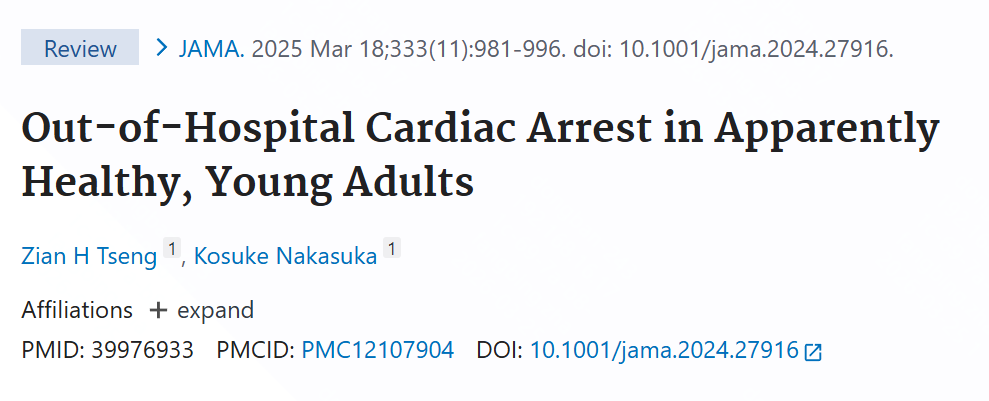
A landmark review published in JAMA on March 18, 2025 — “Out-of-Hospital Cardiac Arrest in Apparently Healthy, Young Adults” — puts hard numbers behind that warning. Among apparently healthy people around the age of 40 who suffer an out-of-hospital cardiac arrest, around 60% die before ever reaching an emergency department. Even more sobering: more than half of the young people who suffer such an arrest already had identifiable cardiovascular risk factors, occult structural heart disease, or undetected genetic defects. These quiet red flags were simply overlooked in everyday life.
That is precisely why cardiovascular health management cannot remain a passive exercise — waiting for an event and then resuscitating. The line of defence has to move far forward. Early screening for myocardial infarction should not be a low-frequency, burdensome, reactive medical act. It should become a proactive, high-frequency part of everyday health management.

Acute myocardial infarction (AMI) poses a grave threat to public health due to its high mortality rate and sudden onset. Yet, multiple international guidelines and clinical studies show that the vast majority of “unexpected” events are in fact the end point of long-standing chronic disease. Drawing on the latest global and domestic expert consensus, this article explains how a dual strategy — high-sensitivity biochemistry at the core, supported by ECG-based electrical warning — can move the detection window forward, transforming passive treatment into proactive health management, and saving vital time for lives.
01 | The Pathological Nature of Acute Myocardial Infarction
AMI is, in essence, the acute clinical outcome of progressing coronary atherosclerosis. The typical pathological cascade unfolds as follows: an unstable atherosclerotic plaque ruptures or erodes, triggering local thrombus formation, which rapidly occludes or severely restricts the coronary lumen. This causes sustained myocardial ischemia and subsequent myocardial tissue necrosis.
Two Concepts That Must Be Clear:
- A heart attack is not an “instantaneous”event.Although the clinical presentation is often abrupt, the pathological foundation of AMI is usually long-standing endothelial inflammation, lipid deposition and plaque instability. The acute event is the end point of chronic disease that has reached a certain stage. The JAMA review underscores the exact point: over half of young sudden-death victims possessed identifiable risk factors or occult lesions — these tragedies were not unforeseen.
- The link between MI and sudden cardiac death.Sudden cardiac death (SCD) is defined as natural death from cardiac causes occurring within one hour of symptom onset. AMI is one of the leading causes of SCD, with its primary fatal mechanism being malignant ventricular arrhythmias— such as ventricular fibrillation — triggered by acute myocardial ischaemia, rather than myocardial necrosis itself.
Recognizing “Invisible” Prodromal Symptoms
Before an AMI is definitively diagnosed, the heart often sends an ischaemia warning. Some patients never experience the classic crushing retrosternal pain, presenting instead with atypical symptoms:
- Radiating discomfort:aching in the jaw, teeth, throat, or left shoulder and back
- Gastrointestinal symptoms:epigastric fullness or pain, frequently mistaken for a stomach problem
- Systemic signs:unexplained extreme fatigue or weakness, or a pronounced sense of impending doom
- Autonomic responses:sudden cold sweats, nausea, vomiting
These signs indicate that the myocardium is in a state of acute ischaemia. For people with coronary risk factors or suspicious symptoms, recognising and intervening in the early — still reversible — stage of myocardial injury is the key to preventing catastrophic cardiac events.
02 | The Clinical Value of a Cardiac Triple Panel
For these prodromal symptoms, high-sensitivity biochemical testing is the anchor that confirms whether the myocardium has been injured. Under the Fourth Universal Definition of Myocardial Infarction, dynamic changes in cardiac markers are the core basis for diagnosis. Clinical practice recommends combined screening of the cardiac triple panel (cTnI / CK-MB / Myo) to build a multi-dimensional monitoring network.
Cardiac Troponin I (cTnI) — The Gold Standard for Confirming Injury:
The 2012 ACCF Expert Consensus Document on troponin elevation states clearly that cardiac troponin (cTn) is the best biomarker for determining acute myocardial infarction. cTnI offers very high myocardial specificity, and high-sensitivity assays (hs-cTn) detect changes at the picogram-per-millilitre (pg/mL) level, enabling precise warning at the very earliest stage of myocardial necrosis. The JAMA review likewise lists high-sensitivity troponin as a core early-screening tool, emphasising that it can deliver the most direct warning before the body collapses: the heart is overloaded — it has to stop.
Myoglobin (Myo) — The Early-Warning Vanguard:
Myo is the marker released fastest after myocardial injury, typically rising within 1–3 hours of onset. In initial screening, Myo’s high sensitivity has strong rule-out value, providing clinicians with a very early reference point for decision-making.
CK-MB — The Interpreter of Disease Progression:
The concentration pattern of CK-MB helps determine the timing of injury and assess its extent. Working together with cTnI and Myo, it makes the overall risk assessment multi-dimensional rather than one-sided.
03 | ECG — The Supporting Sentinel of Risk
While biochemistry remains the diagnostic core, electrocardiography (ECG) plays an irreplaceable complementary role as an electrophysiological monitoring tool. The JAMA review points out that structural heart disease — such as undetected cardiac hypertrophy — is one of the leading causes of sudden death in young people. ECG can detect abnormal electrical activity, while echocardiography serves as the “window” for identifying structural abnormalities and should be an annual check for people who train at high intensity.
Screening for High-Risk ECG Variants
According to the Chinese Expert Consensus on ECG Diagnostic Criteria and Reporting Standards for Myocardial Infarction (2025), the ECG manifestations of acute coronary occlusion are highly heterogeneous. Clinicians should be alert to high-risk variants that do not fully meet traditional STEMI criteria — such as de Winter sign, Wellens sign, the “6+2” phenomenon and Aslanger sign. These are early electrophysiological warnings of acute occlusion, and they complement biochemical markers.
Multi-Dimensional Electrophysiological Monitoring
Combined with ambulatory ECG monitoring, clinicians can track paroxysmal arrhythmias and dynamic ST-T changes in real time. This provides electrophysiological context for biochemical screening and supports a more comprehensive assessment of a patient’s risk of malignant arrhythmia and sudden death.
04 | A Full-Cycle Health Management Ecosystem
Comprehensive screening is not only about detecting acute injury — it is about building a long-term prevention system through the synergy of multiple markers. The JAMA review notes that among apparently healthy young sudden-death victims, up to 22% had sudden arrhythmic death syndrome (SADS): structurally normal hearts harbouring hidden genetic defects such as long QT syndrome. For anyone with a history of unexplained syncope or a family history of cardiovascular disease, cardiovascular genetic risk screening is therefore the most definitive way to open the “genetic blind box”.
-
- Cardiac Function:NT-proBNP measurement helps assess cardiac stress after infarction and detect heart failure risk early.
- Plaque Stability:lipoprotein-associated phospholipase A2 (Lp-PLA2), a marker of vascular inflammation, directly reflects atherosclerotic plaque stability and is an independent predictor of cardiovascular and cerebrovascular disease.
- Fibrosis Assessment:markers such as ST2 reflect the degree of cardiac fibrosis and remodelling, providing an evidence base for long-term risk management. Combined ST2 and NT-proBNP testing predicts myocardial remodelling risk in patients with heart failure following acute MI more comprehensively and sensitively.

The JAMA review sets out a clear testing pathway, but a practical bottleneck remains: if every professional blood or biochemistry test requires taking time off work, registering at a tertiary hospital, queuing and having blood drawn, early screening will never reach the people who need it. To win the race against sudden myocardial infarction, cardiovascular screening must expand into two lightweight scenarios — testing at home and testing nearby in the community.
Scenario 1 | At-Home testing — a private cardiology service at your door
For executives whose time is exceptionally scarce, or for elderly people with limited mobility, we advocate a home-based early screening model that is discreet, convenient and uncompromising on quality:
Medical-grade POCT testing at home
- Advantages:complete privacy protection, a premium experience without leaving home, medical-grade accuracy
- Workflow:online booking → nurse visit for sample collection → rapid testing at a professional laboratory → digital report delivered online
24-hour ambulatory ECG (Holter) wearables
During the same home visit, a nurse can apply a wireless 24-hour Holter patch. It continuously tracks the heart’s true electrical load during sleep, work and exercise — the gold standard for capturing occult arrhythmias — with data automatically uploaded to the cloud for continuous monitoring.
Scenario 2 | Community clinic testing — heart protection on your doorstep
For the general public who want to keep an eye on their everyday health, we recommend empowering community clinics and health management centres:
People can step into a clinic around the corner while shopping or taking a walk. No registration, no long queues — walk in, get tested, and receive results in 12 minutes. Results sync directly to the individual’s personal health record, enabling continuous long-term health tracking.

Core product:
Cardiac triple panel — cardiac troponin I / CK-MB / myoglobin (cTnI / CK-MB / Myo)
With a reaction time of just 12 minutes, it buys back time that matters.
How the technology delivers
Ultra-high sensitivity that uncovers hidden risk. Built on the world’s first near-infrared fluorescent nanosphere technology, the assay eliminates interference from sample autofluorescence and light scattering. Its cTnI sensitivity reaches the picogram-per-millilitre (pg/mL) level, supporting precise warning at the very earliest stage of myocardial necrosis — closely aligned with the high-sensitivity troponin testing concept recommended in JAMA.
Results at speed, without the wait. Samples are tested as soon as they arrive, with results read in as little as 8 seconds. The combined cardiac triple panel (cTnI / CK-MB / Myo) requires only 12 minutes of reaction time.
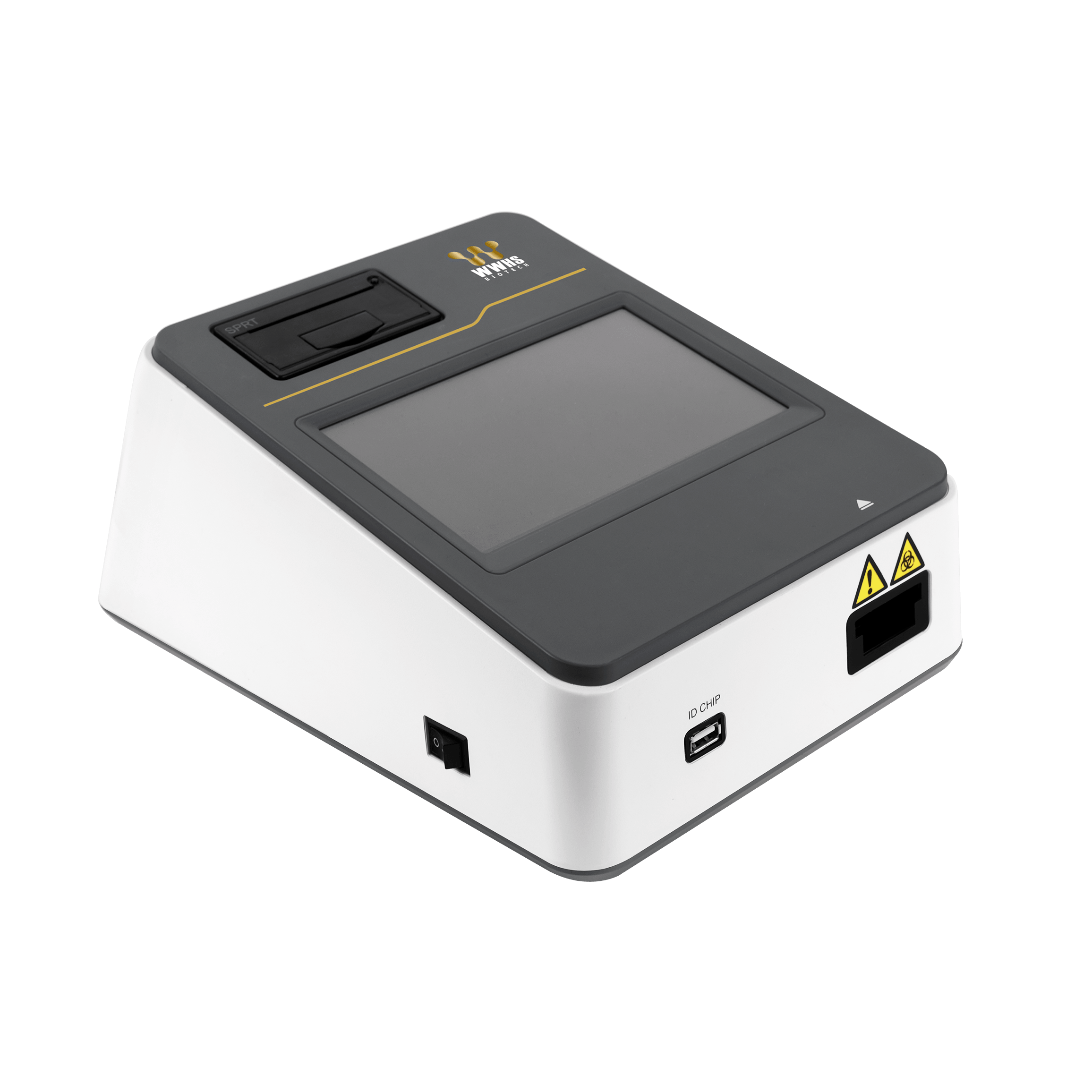
A compact, highly portable POCT device. The NIR-1000 dry fluorescence immunoassay analyzer is small in footprint and supports serum, plasma, whole blood and capillary blood. Samples are tested on arrival, operation is simple, and it fully meets the needs of both laboratory and primary-care rapid testing.
Deeper warning, before the event. Beyond cardiac injury markers, we also offer value-added tests such as lipoprotein-associated phospholipase A2 (Lp-PLA2), which directly reflects atherosclerotic plaque stability as an independent predictor of cardiovascular and cerebrovascular disease.
Early screening for myocardial infarction should not be a heavy medical burden — it should become a light, everyday part of healthy living. Combining “At-Home Rapid Testing + 24-Hour Wearable ECG Tracking” with “Near-Home Community Screening” defines a modern paradigm for consumer cardiovascular health management.
Sansure invites global partners to collaborate as we expand this model — leveraging cutting-edge in vitro diagnostic technologies to build a robust global defense for cardiovascular health.
References
- Thygesen K, Alpert JS, Jaffe AS, et al. Fourth Universal Definition of Myocardial Infarction (2018). J Am Coll Cardiol.2018;72(18):2231-2264.
- Newby LK, Jesse RL, Babb JD, et al. ACCF 2012 Expert Consensus Document on Practical Clinical Considerations in the Interpretation of Troponin Elevations. J Am Coll Cardiol.2012;60(23):2427-2463.
- Chinese Women’s Medical Association, Cardiovascular Committee; China Medical Education Association, Electrocardiology Committee. Chinese Expert Consensus on Electrocardiogram Diagnostic Criteria and Reporting Standards for Myocardial Infarction. Chinese Circulation Journal.2025;40(12):1189-1198.
- Chinese College of Cardiovascular Physicians. 2020 Expert Consensus on the Prevention and Treatment of Heart Failure after Myocardial Infarction. Chinese Circulation Journal.2020;35(12):1166-1180.
- Byrne RA, Rossello X, Coughlan JJ, et al. 2023 ESC Guidelines for the Management of Acute Coronary Syndromes. Eur Heart J.2023;44(38):3720-3826.
- Wang F, Luo Y. Interpretation of the 2012 updated universal definition of myocardial infarction. Journal of Practical Electrocardiology.2013;22(1):498-499.
- Out-of-Hospital Cardiac Arrest in Apparently Healthy, Young Adults. JAMA.2025;333(11):971-980.